
 Jenna Miller
Feb 6 2026
Jenna Miller
Feb 6 2026
How to Prep Your Vehicle for a Car Paint Base Coat
Why Proper Preparation Matters Before Applying Base Coat
Car paint base coats are designed to bond to a clean, properly textured surface. If contaminants, old wax, rust, or glossy paint remain underneath, the base coat may not adhere evenly. Poor preparation often results in visible imperfections such as fisheyes, blotchy coverage, or lifting paint.
Preparation also impacts color accuracy. Uneven surfaces, mismatched primers, or leftover repairs can alter how the base coat reflects light. When done right, prep work creates a consistent foundation that allows color to lay flat and cure evenly.
Gather the Right Tools and Materials First
Before touching the vehicle, make sure you have everything you need. Stopping halfway through prep increases the risk of contamination or rushed work.
Common prep materials include:
- Automotive soap and degreaser
- Microfiber towels
- Sandpaper in multiple grits, usually 80 to 400 for prep stages
- Sanding blocks or dual action sander
- Body filler and spreaders if repairs are needed
- Masking tape and plastic sheeting
- Wax and grease remover
- Clean lint free rags
- Primer suited for your surface
Quality tools save time and help achieve smoother results, especially when working with modern base coat systems.
Wash and Degrease the Vehicle Thoroughly
Start with a deep wash to remove dirt, road grime, and contaminants. Use automotive soap rather than household cleaners, which can leave residues behind.
After washing, degrease the surface using a dedicated wax and grease remover. This step is critical because wax, silicone, and oils can remain invisible to the eye yet cause paint defects later. Wipe in one direction and frequently switch to clean towels to avoid spreading contaminants.
Pay special attention to door edges, trim areas, and around emblems where residue tends to hide.
Inspect the Surface for Damage and Imperfections
Once the vehicle is clean, carefully inspect the body panels under good lighting. Look for dents, scratches, rust spots, chipped paint, and previous repair work.
Mark problem areas so nothing gets overlooked. Even minor flaws can become more visible after the base coat is applied, especially with metallic or pearl colors.
If rust is present, it must be fully removed or treated. Painting over rust almost guarantees future paint failure.
Repair Dents, Scratches, and Rust Before Sanding
Address all body damage before final sanding begins. Use body filler for dents and deep scratches, applying thin layers and allowing proper cure time between coats. Sand the filler smooth and level with the surrounding panel.
For rust, grind or sand down to bare metal until all corrosion is gone. Apply a rust inhibitor or epoxy primer to seal the metal and prevent future oxidation.
This stage determines how straight and smooth your panels will look once painted, so patience is key.
Sand the Existing Paint to Create Proper Adhesion
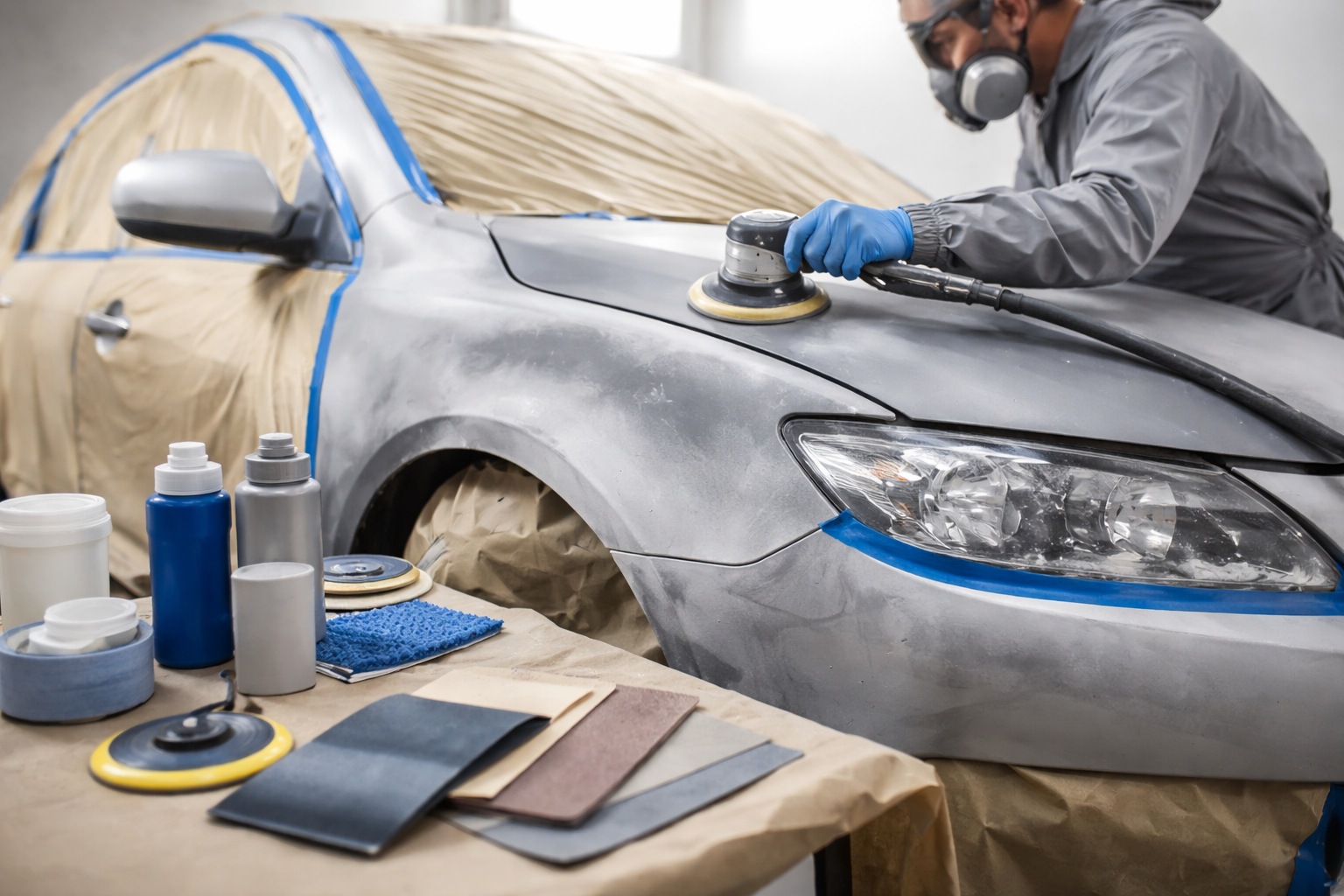
Sanding creates the surface texture needed for the base coat to bond effectively. The goal is not always to remove all existing paint but to dull the surface and eliminate imperfections.
Start with coarser grit sandpaper where needed, such as on repairs or peeling paint. Gradually move to finer grits to smooth the surface. For most vehicles, final sanding before primer or base coat is done with 320 or 400 grit sandpaper.
Use sanding blocks on flat areas to maintain panel shape and avoid finger marks. Curved areas may require flexible sanding pads.
Clean the Vehicle Again After Sanding
Sanding creates dust that can interfere with paint adhesion. Blow off loose dust with compressed air if available, then wipe the entire vehicle with wax and grease remover again.
This second cleaning step ensures the surface is completely free of sanding residue, oils, and fingerprints. Allow the surface to dry fully before moving on.
Skipping this step is a common mistake that leads to rough paint texture or contamination issues.
Mask Off Areas You Do Not Want Painted
Masking protects windows, trim, lights, tires, and interior areas from overspray. Use high quality automotive masking tape and plastic sheeting rather than newspaper, which can leak ink or allow paint bleed through.
Take your time around edges and seams. Clean, tight masking lines contribute to a more professional finish and reduce cleanup later.
Double check that all exposed areas are intentional before spraying any primer or base coat.
Apply Primer Where Needed for a Uniform Surface
Primer serves as the bridge between the surface and the base coat. It helps with adhesion, fills minor imperfections, and provides a consistent color base.
Apply primer to bare metal, repaired areas, or panels with uneven coloration. Once cured, sand the primer smooth with fine grit sandpaper to remove texture and ensure a flat finish.
A uniform primed surface helps the base coat color appear consistent across all panels.
Final Inspection Before Base Coat Application
Before spraying your base coat, inspect the entire vehicle one last time. Run your hand lightly over panels to feel for rough spots. Check for missed sanding marks, dust, or masking issues.
Fixing small issues now prevents major disappointments later. When everything looks clean, smooth, and properly masked, you are ready to apply your base coat automotive paint with confidence.
FAQs
How long should prep work take before applying a base coat?
Prep time varies depending on vehicle condition. Minor repaints may take several hours, while full restorations can require days or even weeks of preparation.
Do I need to remove all old paint before applying a base coat?
Not always. If the existing paint is in good condition, it can be sanded and used as a base. Peeling, cracked, or damaged paint should be removed.
What grit sandpaper is best before base coat application?
Most painters finish sanding with 320 to 400 grit before primer and base coat. Always follow paint manufacturer recommendations.
Can I apply base coat without primer?
Primer is strongly recommended, especially over bare metal or repairs. It improves adhesion and color consistency.
How clean does the surface need to be before painting?
The surface must be completely free of dust, oils, wax, and moisture. Even small contaminants can cause visible paint defects.